Designing a machine vision system requires balancing a complex matrix of variables, from sensor resolution and optical focal lengths to spatial footprints. In modern industrial automation, engineers must prioritize the mechanical layout of the assembly line – including part handling, sensors, and framing – which often leaves illumination as one of the final design considerations. While this sequence follows the logical progression of securing a physical field of view, it can introduce significant friction later in the build. Optimizing image contrast relies heavily on precisely tailored machine vision illumination, yet the space remaining for these lights is often an afterthought.
When lighting is addressed at the tail end of the design cycle, engineers frequently find themselves constrained by tight spatial boundaries. This often forces a difficult choice: redesign the physical layout to accommodate bulky light fixtures or sacrifice inspection quality due to inadequate, poorly positioned illumination. Both compromises cost valuable time and capital. Recognizing this common dilemma in the field, we saw an opportunity to leverage our decades of machine vision expertise to address this specific market need. Our goal was to engineer a high brightness, highly flexible lighting solution that could seamlessly integrate into restrictive envelopes without sacrificing optical output or quality. This initiative led to the development of our MicroBrite Series – a family of high performance, compact products designed to eliminate the spatial compromises engineers face.
Overcoming Thermal Limitations in Miniature Footprints
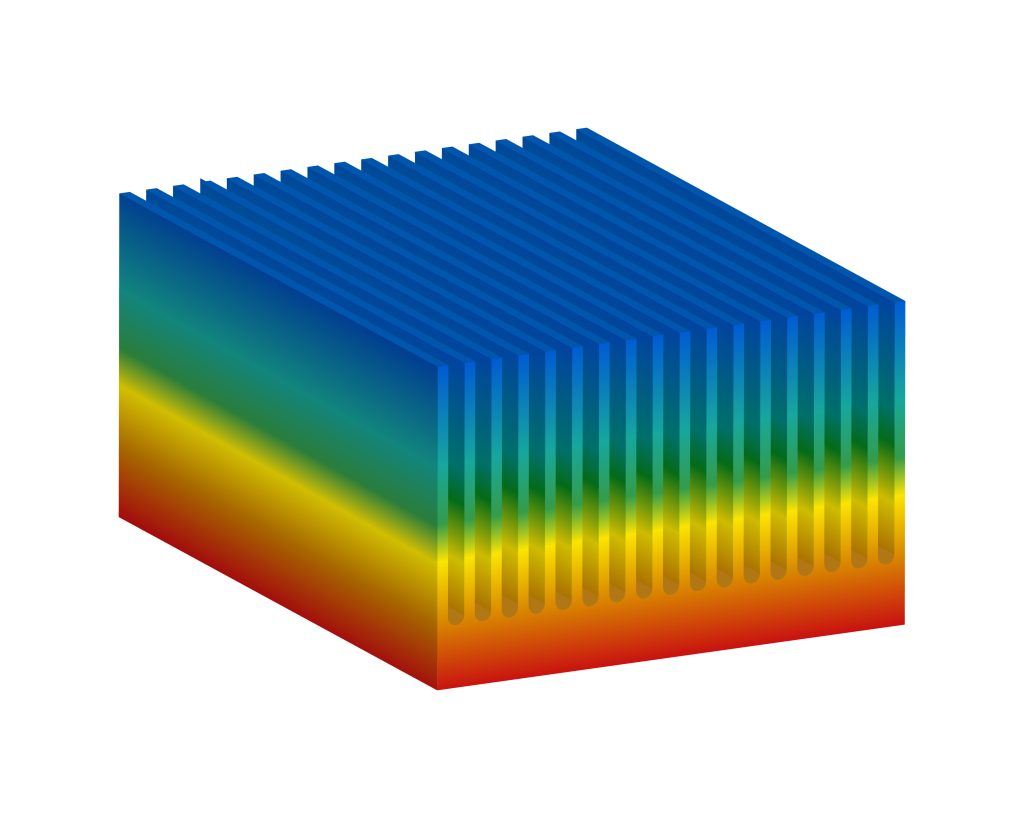
Fitting premium illumination performance into a miniature footprint is not merely a matter of shrinking components; it is fundamentally a thermodynamic challenge. As LED density increases to achieve the high lux output in a compact package necessary for enclosed industrial inspection, heat dissipation becomes the primary limiting factor. In compact machine vision lighting, excessive heat can shift spectral wavelengths, degrade LED lifespan, and negatively impact the stability of the inspection environment leading to higher failure rates. Overcoming these thermal limitations requires extensive engineering.
To solve this, our engineering team uses thermal modeling software to simulate heat transfer and optimize the thermal paths within the miniaturized housings. This process informs component selection, including the integration of high-efficiency LEDs and specialized heat-sinking materials that rapidly pull thermal energy away from the critical components. By managing the thermal load, the MicroBrite Series maintains consistent high output, product longevity and spectral stability, ensuring reliable performance even in spatially constrained applications.
Ensuring Flexibility and Optionality
Beyond thermal management, we understood that a compact lighting series must still offer the extensive optionality that Advanced Illumination customers expect. Our core differentiator has always been providing flexibility and speed, on top of performance – enabling engineers to solve any application challenge with standard, quick-to-order products. The MicroBrite Series was developed with this exact philosophy, ensuring that physical size constraints do not limit your optical, mechanical and electrical choices to solve the application.

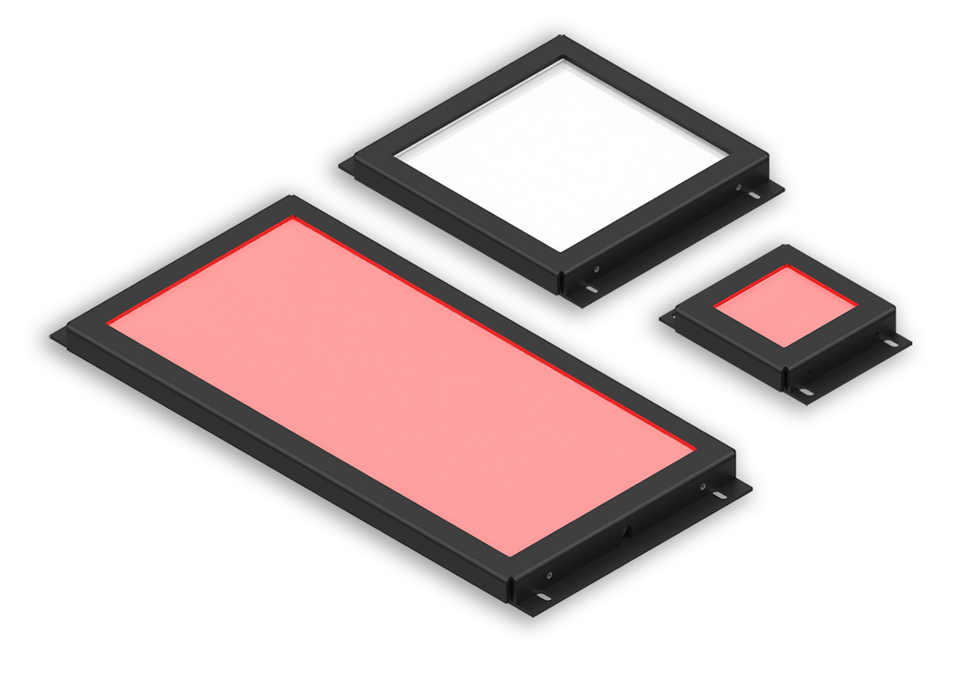
To address the diverse geometry of machine vision challenges, we engineered multiple form factors within the MicroBrite family. For instance, the BT Series backlights provide high-intensity, edge-to-edge uniform illumination in an ultra-thin profile while maintaining options such as collimation and polarization. They are ideal for precise silhouetting, edge detection, and hole location without requiring deep cavities behind the inspection object. For applications requiring directional general-purpose illumination, the AL295 Series bar lights offer a highly expandable and adaptable solution. These compact bar lights can be utilized individually or in multi-light arrays to create customized geometries, outperforming larger competitors with intense output while fitting easily into confined machine envelopes.
Specialized Optics and Smart Control
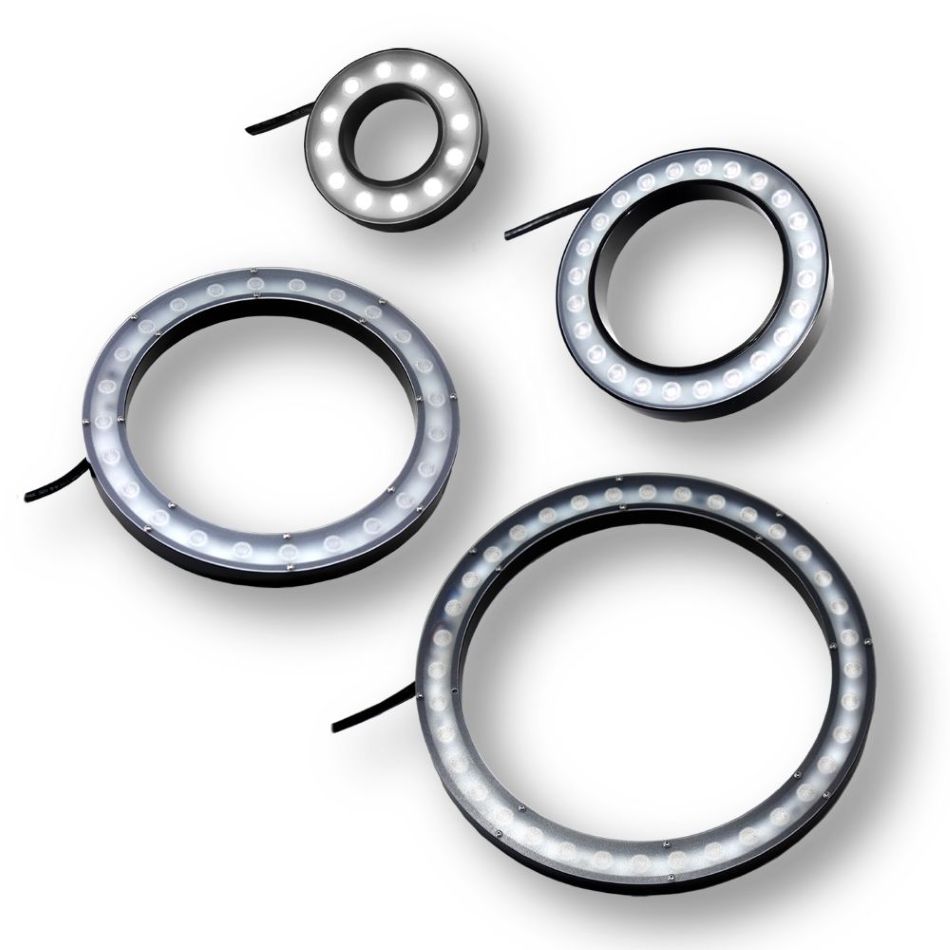
When uniform, shadow-free illumination is required for reflective or complex surfaces, the MicroBrite ring lights – including the DF198 Series, DF196 Series, and RL208 Series – provide exceptional performance. These ring lights deliver high-intensity output, with options ranging from directional bright field to diffuse dark field illumination, allowing for optimal contrast enhancement across a wide variety of working distances. Rounding out the portfolio are the SL223 Series Spot Lights and LL232 Series Line Lights. The spot lights deliver concentrated, high-contrast illumination for localized small inspections, while the line lights utilize Fresnel lenses to provide the intense, uniform profiles essential for high-speed line scan applications, such as web inspection or continuous material processing, in a compact package.
Developing a compact, high-output light is only part of the equation; controlling it safely is equally critical. In high-speed machine vision applications, overdriving LEDs is often necessary to “freeze” motion and maximize contrast without camera blur. To maintain peak performance while safeguarding the hardware, the MicroBrite Series integrates our proprietary SignaTechTM control system. SignaTechTM simplifies connectivity and control without overcomplicating the user experience. By reading a memory chip embedded in the light-head cable, our microprocessor-based controllers automatically recognize the LED characteristics and establish maximum safe operating parameters. This feature allows engineers to maximize light output through controlled strobe overdrive – significantly increasing brightness in short pulses – while ensuring the longevity and safety of the illuminator in a plug and play solution. To further streamline integration, the MicroBrite series can also be configured with inline controllers that provide full overdrive strobe functionality within a compact, cable-integrated package.
Empowering the Industrial Engineer
Ultimately, the creation of the MicroBrite Series was driven by a commitment to simplifying the machine vision design process. Industrial engineers are tasked with balancing complex optical requirements within increasingly rigid mechanical constraints. Lighting should be an enabler of system performance, not a bottleneck that forces late-stage redesigns.
The final outcome for our customers is a robust portfolio of high-performance, compact illumination tools. By combining advanced thermal management, an extensive range of form factors, and the plug-and-play reliability of SignaTechTM, the MicroBrite Series empowers engineers to confidently integrate optimal lighting into any space. With these standard, quick-to-order solutions, resolving demanding application challenges with speed and precision has never been more accessible.
To learn more about selecting compact lighting solutions for space-constrained applications, explore the MicroBrite Series or contact our team to discuss your specific system requirements.
Interested in learning how our experts can assist you with your machine vision needs?
Click the link below to speak with our application team.