
Throughout 2025, work across product development, technical content, and industry engagement was guided by a consistent goal: to support engineers in achieving the best machine vision imaging results. From modular bar lights that adapt to changing requirements to educational resources that clarify design trade-offs, the year’s efforts reflected a practical, application-focused approach.
AL325 Modular Bar Light Series
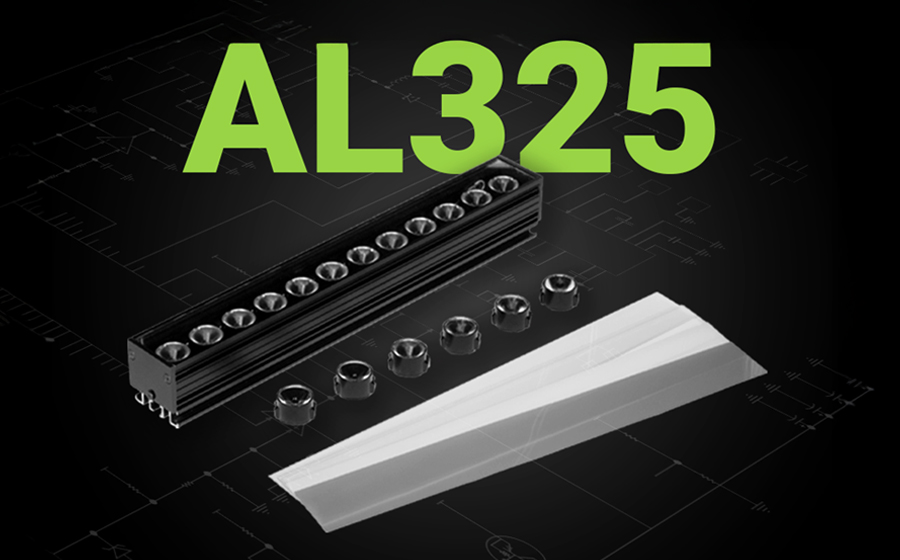
The highlight of 2025 was the launch of the AL325 Modular Bar Light Series, designed for simplified application setup. The AL325 introduced a modular architecture that allows engineers to swap lenses, beam angles, and light-conditioning materials directly in the field, making it easier to refine illumination as applications evolve while providing best-in-class performance. Embedded control capability for continuous or strobe operation reduced the need for separate external controllers, while the range of available wavelengths, lens options, and lengths supported use in both small and larger-scale setups.
By focusing on user-swappable optics and light-conditioning materials, the AL325 helped teams transition away from testing multiple fixed bar lights and instead work from a single configurable platform. This approach supported faster prototyping while providing more efficient adjustments in the field, aligning with the broader industry trend toward flexible, modular machine vision components.
Technical Resources and White Paper
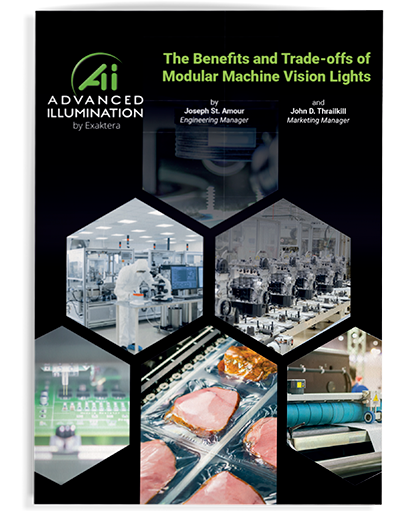
Our engineering team continued to share insights that help clarify design considerations in machine vision lighting. The year’s featured technical resource, “The Benefits and Trade-offs of Modular Machine Vision Lights,” explored how modular lighting can simplify component selection, reduce development time, and support long-term adaptability in inspection systems. The white paper discussed the role of interchangeable elements such as TIR lenses, diffusers, and spherical lens arrays, and highlighted how in-field adjustments allow engineers to respond to changing requirements without redesigning the entire lighting setup.
Rather than focusing only on advantages, the paper also addressed trade-offs, helping readers evaluate where modular solutions fit best within their projects. This made it a practical reference for teams comparing modular lighting to traditional fixed systems and deciding how to approach future system designs.
Lighting Education
This year, we released a series of educational blogs centered on the real-world application challenges and techniques faced by system designers and integrators. Here’s a look at some of this year’s top highlights:

“Solving Logistics Challenges with Machine Vision Lighting” examined illumination strategies for warehouse and logistics environments, where high-speed scanning, varying package surfaces, and changing ambient conditions require stable, high-contrast lighting. The article looked at how light placement, intensity, and beam control can support more consistent read rates in demanding material handling applications.
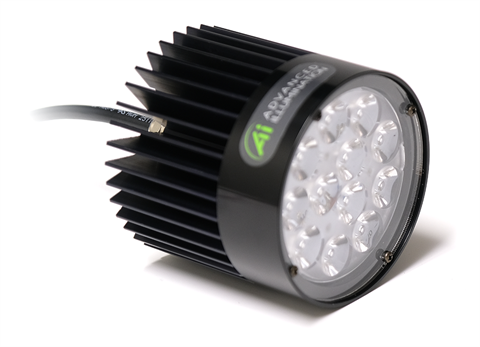
“Introduction to Inspection Spot Lights for Machine Vision Applications” reviewed how single-point, multi-point, and coaxial spot light configurations influence uniformity, working distance, and image clarity in inspection tasks. By outlining how each configuration behaves in different setups, the article helped engineers match spot light types to specific application needs.

“How Color and Wavelength Impact Machine Vision Accuracy” explored how spectral choices affect contrast, material response, fluorescence, and transmission, offering a framework for selecting wavelengths that improve overall system accuracy. Together, these resources reflected an ongoing belief that practical education and shared knowledge lead to better system design decisions.
Industry Engagement
Throughout the year, Advanced Illumination connected with partners and engineers at industry events. At SPIE Photonics West 2025, the team participated in discussions around photonics technologies and the role of illumination in vision inspections. Automate 2025 offered an opportunity to highlight how well-controlled lighting supports automation in production environments. These engagements remained an important way to understand current challenges, gather feedback, and align future work with the needs of the machine vision community.
Looking Ahead
Machine vision applications continue to evolve, requiring lighting solutions that balance performance, configurability, and ease of integration. In 2026, Advanced Illumination will build on this year’s developments with ongoing product work and additional technical resources designed to support engineers in achieving accurate, repeatable imaging results. The team looks ahead to continued participation in SPIE Photonics West 2026 in San Francisco, Automate 2026 in Chicago, and VISION 2026 in Stuttgart, as well as numerous industry specific events.

These events will provide further opportunities to stay closely connected to the needs of users across different industries and applications.
Stay Connected
As 2025 comes to a close, there is a deep appreciation for the continued collaboration and feedback from customers, distributors, and partners. For updates on upcoming resources, new releases, and insights from the team, readers are encouraged to follow Advanced Illumination on LinkedIn. If you have an experience working with Ai lighting solutions in the past and you would like to have your application featured on our website, please send us an email and we would be glad to work with you.
With ongoing company updates, new blog posts, and product announcements, staying connected has become increasingly important, which is why Ai launched a monthly newsletter to help share this information more directly. If you are interested in receiving Ai updates directly in your inbox, you can sign up for the newsletter to stay informed about the latest resources and developments.